Matte vs Glossy Glazes: Appearance, Durability, and Food Safety Compared
Set two mugs on a table, thrown from the same clay and dipped in the same base recipe, and most people reach for the glossy one first. It catches the window light, throws a bright arc of reflection, and makes the rim look crisp. Then they pick up the matte mug and something shifts: the color reads deeper, the form feels quieter, and the clay seems closer to the surface. Neither finish is better. But they behave differently in the hand, in the dishwasher, and on a shelf where someone is deciding whether to buy.
The difference is microscopic texture. A glossy glaze cools into a smooth, continuous glass. Light hits it and bounces off in one direction, which is why you see reflections, highlights, and a near-mirror surface on a well-fired celadon. A matte glaze is full of tiny crystals or phase separation just below the surface. Those scatter light in every direction, so the surface glows instead of reflecting.
Potters get there in a few ways, often combined:
That last point matters. There is a real difference between a formulated matte and a glaze that simply did not melt. The first can be hard, durable, and food safe. The second is often chalky, porous, and prone to staining.
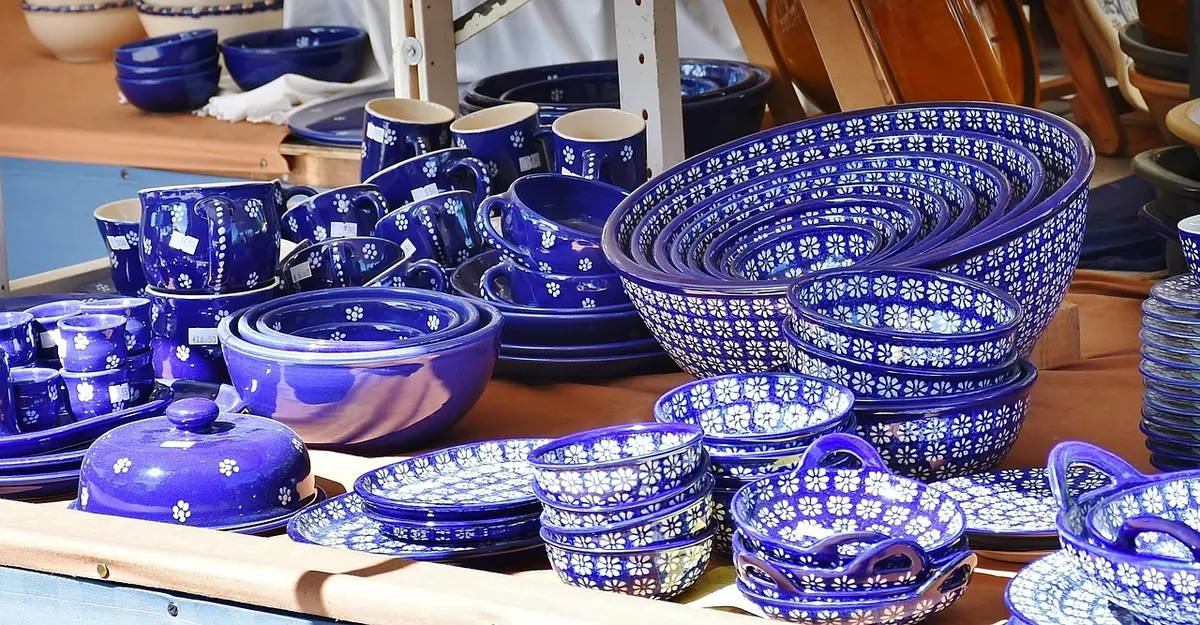
Glossy glazes flatter curves. They amplify a good throwing line and expose a bad one, because every bump bends the reflection. If you want a pot that looks wet, juicy, and dimensional, gloss is doing the work for you. It also pushes color upward: iron reds, copper greens, and cobalt blues tend to look brighter and more saturated on a glossy surface.
Matte glazes soften everything they touch. Edges feel less sharp, throwing rings nearly disappear, and colors take on a denser, more mineral quality. On speckled or iron-rich clay bodies, a matte surface lets the flecks read without a glassy layer shouting over them. This is why so much minimalist tableware lands on matte, and why sculptural work often looks more solid in it.
Between the two sits satin, or semi-matte, which many potters find is the practical sweet spot: enough sheen to clean easily, enough softness to look handmade.
Both finishes wear, but they wear visibly in different places.
Dishwasher detergents are aggressive, especially on glazes that were fired cool or formulated with a lot of flux. If a pot is going into daily rotation, test it rather than assume.
Matte versus glossy is not the deciding factor for food safety. Three other things matter far more: whether the glaze was fired to maturity, whether it is formulated without lead and cadmium for food surfaces, and whether the fired surface is durable in the presence of acid and heat.
An underfired glossy glaze can leach. A well-melted matte glaze generally does not. Coffee, tea, wine, tomato, citrus, and vinegar are the everyday acids that do the testing, and a properly vitrified surface handles them without complaint.
Crazing deserves attention because it is a durability problem, not just a cosmetic one. Cracked glaze gives food acids a path toward the clay body underneath, and a porous body can hold residue. Some matte glazes craze and you will never see it.
Practical steps:
If you are selling dinnerware, or you have a specific health concern about heavy metal exposure, get proper leaching testing done or speak with a ceramics supplier or qualified professional rather than relying on a home test.
Day-to-day tableware rewards gloss on the inside and tolerance on the outside. Beyond that, the choice is mostly about use:
You do not need a lab to learn how a finish behaves. You need consistency.
Pick gloss when you want light, easy cleaning, and colors that pop. Pick matte when you want depth, quiet, and a surface that feels good in the hand. For dinnerware, the safest and most beautiful answer is usually both: a matte exterior that pleases the eye and a fully melted, well-fired interior where the food actually sits. Ask questions, fire to maturity, keep notes, and let the pots that survive a year of Tuesday nights tell you what your clay and glaze really do.
Photo: RitaE / Pixabay
Previous Post
Glaze Layering for Beginners: How to Test Combinations Without Ruining a Kiln Load
Next Post
Essential Clay Tools for Beginners: A Minimalist Starter Kit